Teaching a parrot to talk is one of the most rewarding aspects of parrot ownership — but it requires the right species, the right timing, and a consistent training approach. Not every parrot will talk, and forcing the process produces nothing. What works is understanding how birds actually learn vocal communication, then building on that systematically.
Which Parrots Can Actually Learn to Talk?
Talking ability varies significantly by species. Before expecting speech, understand what your bird is capable of:
- African Grey (Psittacus erithacus): Widely regarded as the best talker in the parrot world. Capable of 1,000+ words and contextual speech — using words in appropriate situations rather than random mimicry. Alex, a research African Grey studied by Dr. Irene Pepperberg, demonstrated understanding of object categories, colors, and numbers.
- Amazon parrots (Yellow-naped, Double Yellow-headed, Blue-fronted): Clear, loud speech with excellent tonal quality. Often develop surprisingly human-sounding voices.
- Eclectus: Deliberate learners, but develop large vocabularies and clear pronunciation.
- Indian Ringneck: Can learn hundreds of words; tend to speak in their own distinct voice rather than mimicking the owner’s.
- Budgerigars (budgies): Small bird, surprisingly capable. Some individuals learn 100–500 words, though speech is faster and higher-pitched.
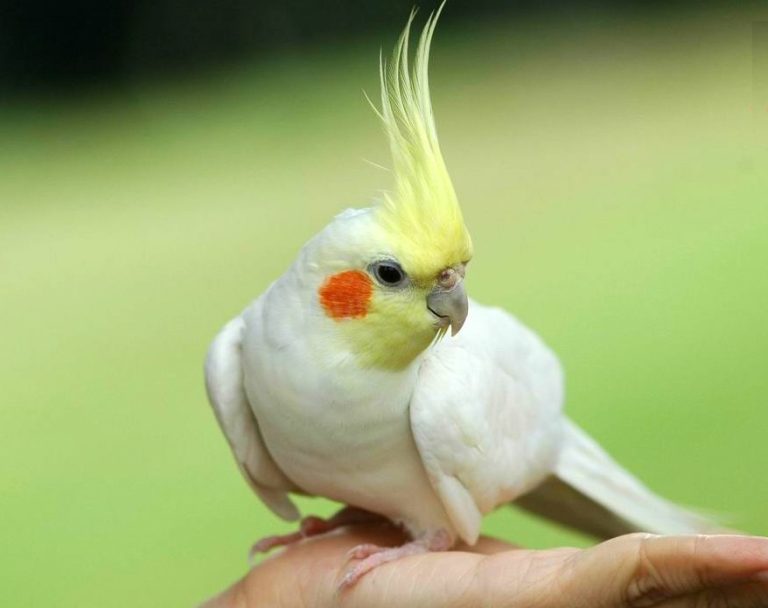
- Cockatiels and Corellas: More inclined toward whistling than words. Can learn phrases, but whistling usually dominates once they master it. Teach words first — once a cockatiel fixates on whistling, word training becomes much harder.
- Macaws and Cockatoos: Learn to talk but aren’t typically the strongest speakers. More known for mimicking sounds and tones than building vocabulary.
Individual variation matters as much as species. A “talker” species produces birds that can talk — not birds that will talk automatically. A bird that doesn’t feel safe, bonded, or stimulated won’t vocalize no matter how many hours you put in.
Why Parrots Talk: The Biology
Parrots are flock animals. In the wild, flock members develop shared calls — contact sounds that signal belonging and location. When a parrot lives with humans, it attempts to join the “flock” by matching the sounds its companions make. This drive is social, not performance-based.
The vocal learning system in parrots involves two distinct brain pathways: a core pathway (active in adults for learned vocalizations) and a “shell” pathway (active during learning and when producing novel sounds). This dual system — unique among birds — is what gives parrots their exceptional ability to learn new sounds throughout life, unlike most other species that have a fixed learning window in youth.
How to Teach a Parrot to Talk: Step-by-Step
- Build trust first. A stressed or fearful bird will not talk. Before any speech training, spend 2–4 weeks simply being present — talking to the bird, handling it gently, and letting it step up without pressure. Trust is the foundation; without it, nothing else works.
- Choose a starting word carefully. Pick a short, high-pitched word or phrase: “hello,” the bird’s name, or “step up.” Consonant-heavy words with clear sounds (k, p, t) are easier for parrots to reproduce than words heavy in vowels. Avoid starting with long phrases.
- Use the morning and evening windows. Parrots are most vocal and receptive at dawn and dusk — this mirrors their natural flock communication patterns. Short sessions (10–15 minutes) during these windows are more effective than one long mid-day session.
- Repeat clearly and consistently. Say the target word directly to the bird, at close range, with eye contact. Make it a ritual: say “hello” every time you approach the cage, “good morning” when you uncover it, “good night” when you cover it. Context-associated words are learned faster because the bird connects the word to a repeating situation.
- Reinforce immediately. The moment the bird produces even a rough approximation of the word, reward with a small piece of preferred food (apple, banana, carrot, walnut) plus enthusiastic verbal praise. The reward must happen within seconds of the vocalization — delayed reinforcement doesn’t work for birds.
- Don’t teach whistling until the vocabulary is established. This is the most common mistake with cockatiels and corellas. Whistling is neurologically easier for birds to produce than words. Once a parrot masters whistling, it will default to it over speech. Establish at least 5–10 words before introducing any whistle training.
- Progress one word at a time. Don’t introduce a second word until the first is reliable. Attempting to teach multiple words simultaneously slows overall acquisition. When the first word is consistent (produced unprompted), begin the second — often learned faster because the bird has already mapped the training pattern.
- Use a consistent talker. Birds often bond their speech learning to one specific person — usually the person who spends the most time with them and whose voice pitch is closest to the bird’s natural range. Female voices tend to produce clearer mimicry because the pitch is closer to a parrot’s natural vocal range.
Training Environment Matters
Background noise is a training killer. Radio, TV, and other birds competing for auditory attention reduce a parrot’s ability to isolate and learn specific sounds. During training sessions:
- Move to a quiet room without other birds present
- Turn off TVs and radios
- Make eye contact — parrots learn by watching the speaker’s mouth
- Keep the session calm; excitement and nervousness are both distracting
If you have multiple parrots, train them separately. Two birds together will engage with each other rather than focusing on you.
When Nothing Works: Troubleshooting
The bird mumbles but won’t produce clear words: This is normal early-stage speech. The bird is processing and practicing when you’re not in the room. Continue consistency — clear speech will emerge.
The bird talks, but only when alone: Many parrots vocalize more freely when unobserved. Hidden speech is still speech — it means the training is working. Over time, as the bird builds confidence, vocalizations will occur in your presence.
The bird was talking and stopped: Behavioral or health trigger. Possible causes: illness, stress from environmental change (new pet, moved cage, new person in the home), or loss of motivation. Rule out illness first with a vet check. If the bird is healthy, review what changed in the environment.
The bird has been with you for months and won’t attempt any vocalization: Check species first — not all individuals of even the best-talking species will talk. Also consider: Is the bird fully bonded? Does it step up willingly? Is it housed in a high-traffic, high-noise environment? Solving bonding and environmental issues often unlocks speech.
FAQ: Teaching Parrots to Talk
How long does it take to teach a parrot to talk?
Highly variable. Some budgies produce their first word in 2–3 weeks of consistent training. African Greys may take 6–12 months to begin speaking but then develop rapidly. Most parrots show results within 2–6 months if training is consistent and the bond is strong.
Do parrots understand what they say?
In African Greys, research strongly suggests contextual understanding — birds use words appropriately in context rather than randomly. In most other species, speech is primarily functional mimicry (using words to get attention or food) rather than semantic understanding. The distinction blurs in individual birds with long-term, rich social environments.
At what age should I start training?
Younger birds learn faster, but adults can learn too. The critical socialization window for parrots is roughly 3 months to 1 year — birds raised with human contact during this period are significantly easier to work with. An adult bird with no prior training history can still learn to talk; it simply requires more patience and trust-building first.
Should I use audio recordings when I’m not home?
It can help as supplemental exposure, but not as a substitute for live training. Parrots are social learners — they respond to interactive communication, not passive audio playback. Use recordings for reinforcement of words already being learned, not as the primary teaching method.
Is it cruel to teach parrots to talk?
No — speech training is enrichment, not coercion. Parrots in the wild engage in constant vocal learning within their flocks. Teaching them to communicate with you is a natural extension of that drive, not an imposition on it. What’s cruel is keeping a highly intelligent social animal in isolation with no mental stimulation. Speech training is the opposite of that.