
Canine distemper is one of the deadliest viral diseases in dogs — and one of the most preventable. It’s caused by Canine morbillivirus, a paramyxovirus that attacks multiple body systems at once. Without treatment, it’s often fatal. With early care and proper vaccination, most dogs can recover.
You’ll sometimes hear it called Carré’s disease or canine plague. Whatever name you use, the disease is serious — and fast-moving. Here’s what every dog owner should know.
How do dogs get distemper?
The virus spreads through direct contact with infected animals and through the air. It enters through the respiratory and digestive tracts.

Here’s what makes it genuinely tricky: you can bring the virus home on your shoes without knowing it. Cats can carry it without showing any symptoms. Wild animals — foxes, wolves, raccoons, ferrets — are natural reservoirs.

The incubation period is 1–3 weeks, sometimes as long as three months. During that time, your dog appears healthy but is already shedding the virus through saliva, urine, feces, and nasal discharge.

One small piece of good news: the virus is fragile outside a host. It survives a few weeks at room temperature but is killed in under 30 minutes at 60°C. Standard disinfectants destroy it on contact.
Early symptoms of distemper in dogs
The first signs look a lot like a common cold — which is exactly why owners miss them.

Watch for:
- Loss of appetite and unusual lethargy
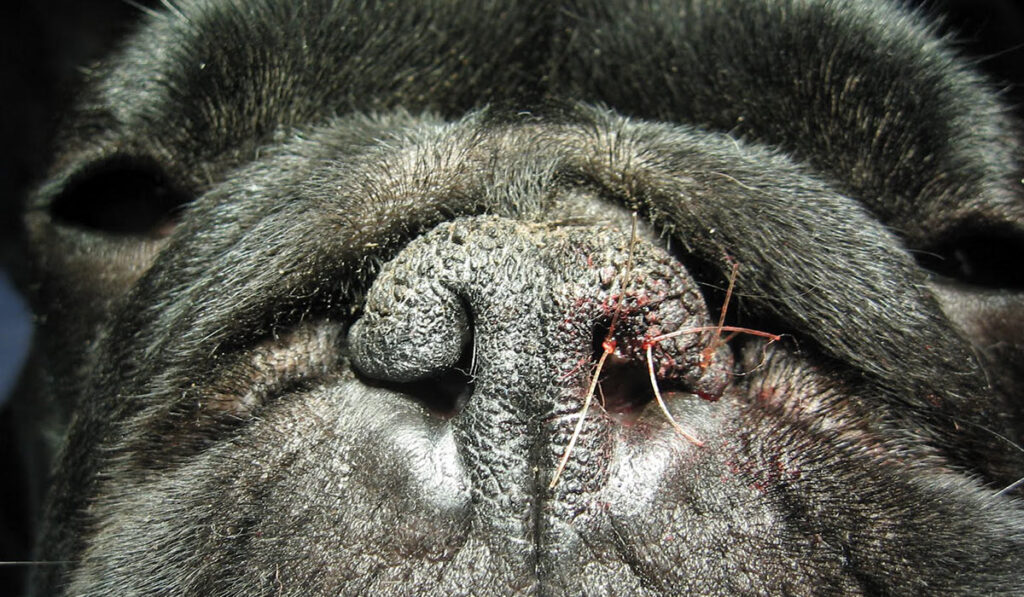
- Dry, cracked nose
- Red, watery eyes and sensitivity to light
- Hiding in dark, quiet spots
- Vomiting or loose stools
- Heightened anxiety or sudden timidity
Puppies under 12 months and immunocompromised dogs are at highest risk. Hunting dogs face greater exposure from contact with wildlife. If you notice any combination of these symptoms, don’t wait — call your vet the same day.
Forms of distemper in dogs
Distemper doesn’t follow a single pattern. Vets identify five distinct forms, and most infected dogs develop a combination of them.
Respiratory form
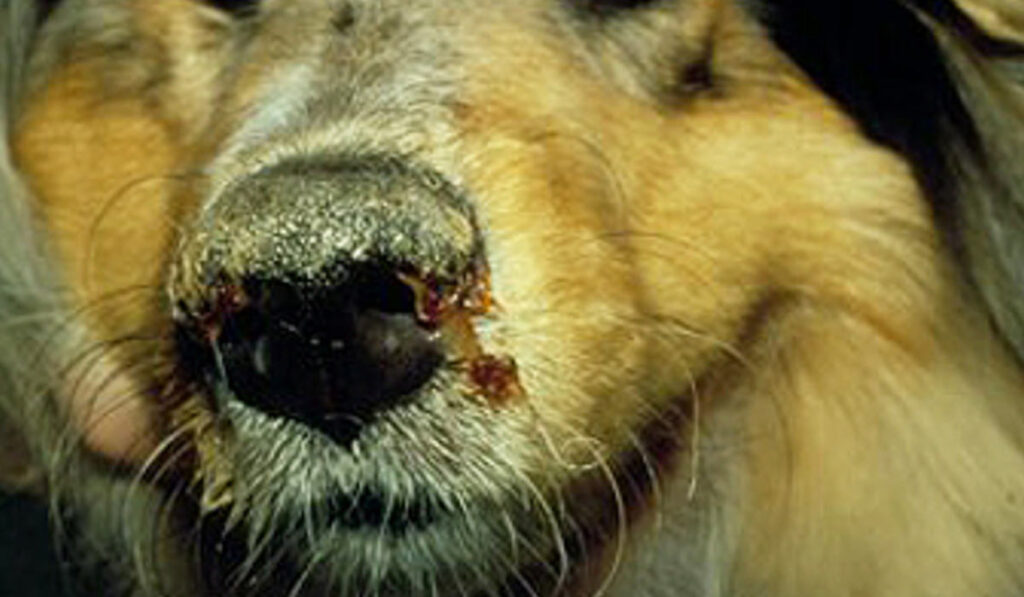
The most common presentation. Fever, loss of appetite, and increased thirst come first. Then coughing and sneezing develop, with eye and nasal discharge that starts clear and turns yellow-green. Left untreated, it advances to pneumonia.
Intestinal form
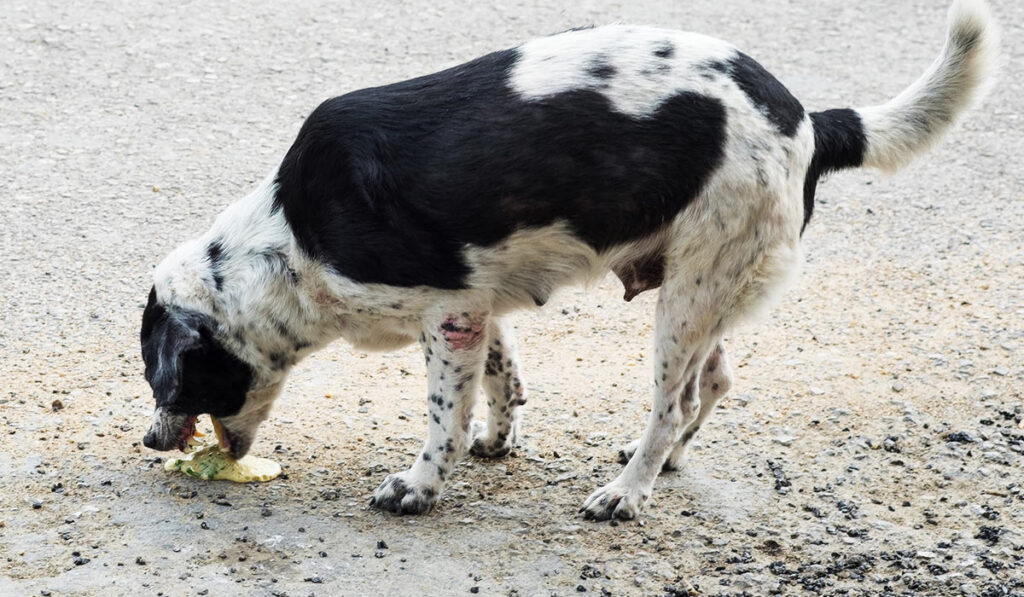
The dog stops eating, grows weak, and develops vomiting and diarrhea. A white coating appears on the tongue, the breath turns foul, and the liver may become enlarged. Vomit often contains mucus, bile, and undigested food.
Nervous form
The most dangerous form. Behavioral changes appear first — unusual aggression, fearfulness, or disorientation. Then come loss of coordination, exaggerated reactions to sound and touch, and nighttime howling. As the disease progresses, seizures, hind leg paralysis, and encephalitis can develop.

This form has the worst prognosis. If heart or respiratory muscles become paralyzed, it can be fatal. Time matters enormously here.
Cutaneous form
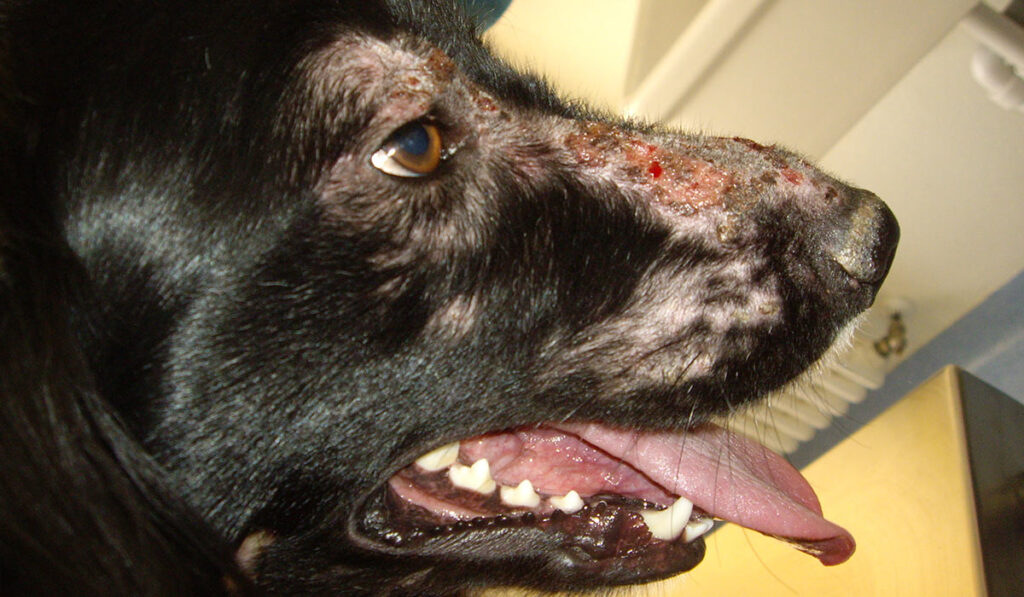
Usually the mildest — but often the first visible clue that something is wrong. Small pustules appear on the inner thighs, abdomen, ears, and around the eyes and mouth. They burst and leave brown crusts behind. Swelling of the paws, ears, and eyelids is also common.
Mixed (generalized) form
The most commonly diagnosed form — particularly in unvaccinated puppies. It combines symptoms from two or more of the forms above. The unpredictability of the mixed form makes treatment more complicated and recovery less certain.
How is distemper treated?
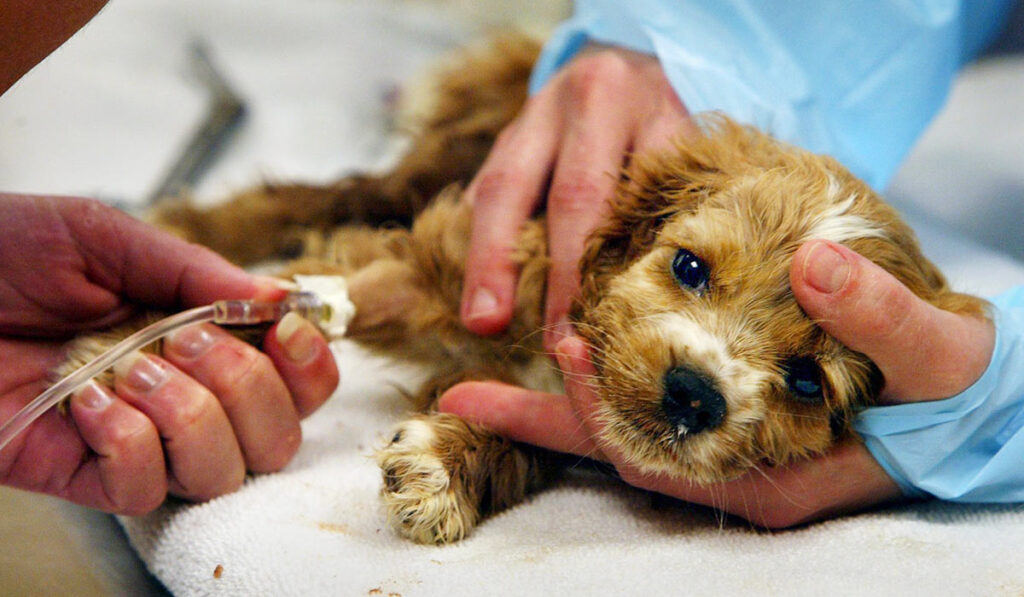
There’s no antiviral drug that kills the distemper virus directly. Treatment is supportive — the goal is to keep your dog stable while their immune system does the work.

A vet will typically prescribe:
- IV fluids to prevent dehydration
- Antiemetics and gut-support medications
- Antibiotics to block secondary bacterial infections
- Anticonvulsants if neurological symptoms are present
- Liver and kidney support
- Immune-boosting serums (most effective in the early stages)

Don’t try to manage distemper at home. The disease moves quickly, and waiting even 24 hours can make a real difference in outcomes. If your dog shows symptoms, call your vet immediately.
Can a vaccinated dog still get distemper?
Vaccination is by far the most effective protection — but it isn’t an absolute guarantee. If a vaccinated dog does get infected, the illness is typically much milder and responds better to treatment.
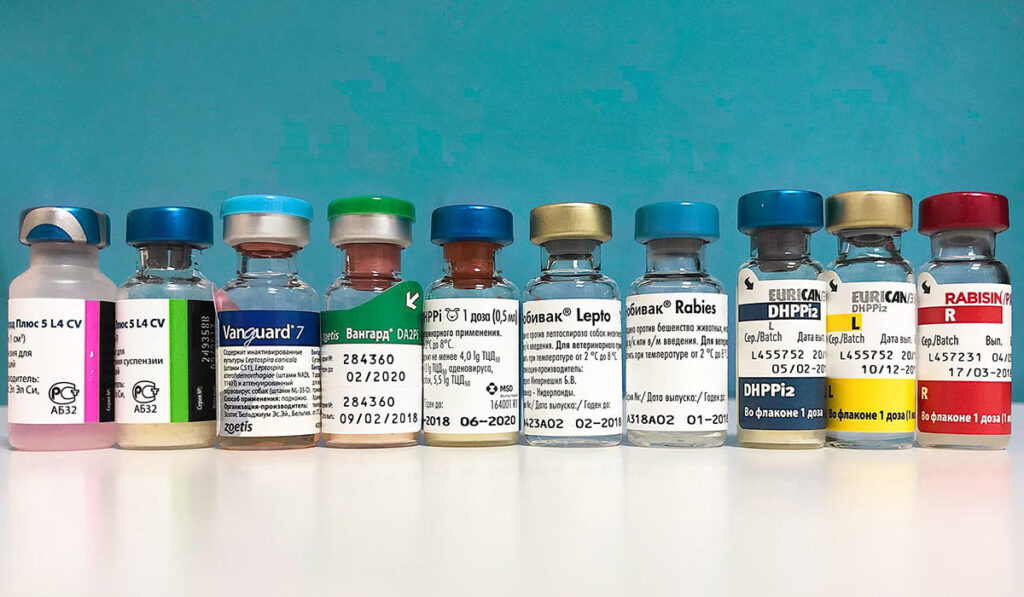
Vaccine failure happens occasionally — usually due to improper storage, vaccinating an already-sick dog, or a manufacturing defect. That’s why annual boosters and sourcing vaccines from reputable clinics both matter.
The standard schedule: first vaccine at 8–10 weeks, booster at 12–16 weeks, then annual revaccination for life.
Is distemper contagious to people?
No. Canine distemper cannot infect humans. You can safely care for your sick dog — cuddle them, comfort them, handle their medications — without any risk to yourself.
Preventing distemper
Vaccination is the foundation — nothing else comes close. That said, a few habits add an extra layer of protection:
- Wipe your dog’s paws after every walk, especially in areas with stray dogs or wildlife
- Avoid letting your dog interact with visibly sick or stray animals
- Keep up with regular vet checkups and routine bloodwork
- Support immune health through balanced nutrition and daily exercise
A strong immune system won’t stop the virus — but it significantly improves the odds of survival and full recovery if infection does happen. Vaccinate on schedule, don’t skip annual boosters, and call your vet at the first sign of trouble.