Fleas are the most common external parasites affecting cats, dogs, and other household pets. These tiny blood-sucking insects are remarkably resilient—they can survive months without a host and jump distances up to 150 times their body length. For cats, a flea infestation isn’t just uncomfortable; it’s dangerous. Constant scratching creates open wounds that become entry points for bacterial infections, potentially leading to severe dermatitis, allergic flea dermatitis (FAD), and secondary pyoderma. Kittens and elderly cats are especially vulnerable—heavy infestations can cause life-threatening anemia. Additionally, fleas are intermediate hosts for tapeworms (Dipylidium caninum), which cats ingest when grooming.
Understanding Cat Fleas: Biology and Behavior
The cat flea (Ctenocephalides felis) is a wingless insect approximately 2–3 mm long with a laterally compressed body that allows it to move easily through fur. Its piercing-sucking mouthparts penetrate skin and fur with ease, while powerful hind legs enable jumps exceeding 50 cm vertically and 30 cm horizontally—proportionally equivalent to a human jumping 200 meters.
Adult fleas spend their entire life on the host, feeding on blood multiple times daily. A single female can lay up to 40–50 eggs per day (not 400—that’s the total lifetime output). These eggs lack adhesive properties and fall off into the environment—carpets, bedding, floor cracks, upholstery—where they hatch into larvae within 2–12 days depending on temperature and humidity.
Flea larvae are blind, worm-like creatures that feed on organic debris and adult flea feces (digested blood). After 5–11 days, larvae spin cocoons and enter the pupal stage, where they can remain dormant for months until vibrations, heat, or carbon dioxide signals a potential host nearby. This survival mechanism makes flea infestations difficult to eliminate without addressing the environment.
How Cats Get Fleas
Even strictly indoor cats can acquire fleas. Common transmission routes include:
- Contact with infested animals: Other pets, stray cats, or wildlife near windows and balconies.
- Environmental exposure: Fleas live outdoors year-round in temperate climates. They inhabit grass, soil, leaf litter, and snow, waiting for a host.
- Human transfer: People can carry flea eggs or larvae indoors on shoes, clothing, or bags.
- Shared spaces: Apartment hallways, basements, and heating ducts provide ideal breeding grounds.
Fleas thrive in warm, humid environments (65–80°F / 18–27°C, 70–85% humidity). In multi-unit housing, infestations can spread through shared walls and ventilation systems.
Signs Your Cat Has Fleas
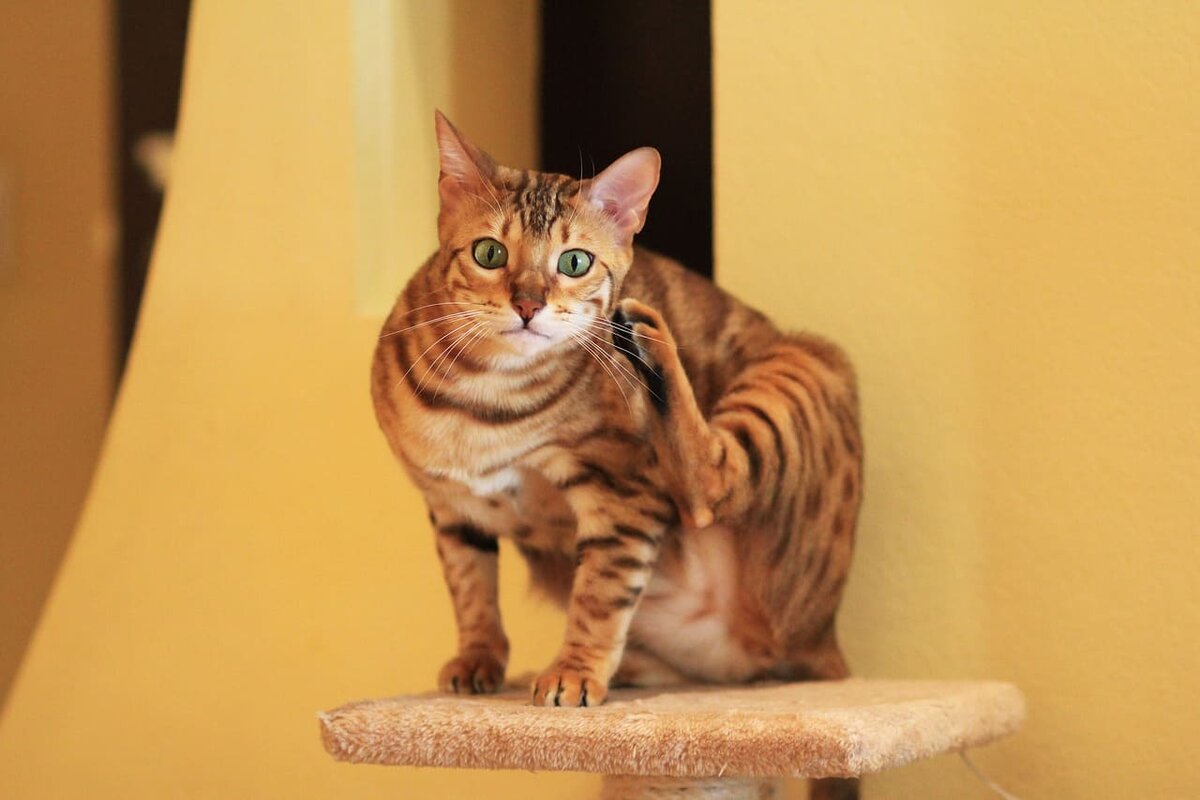
- Excessive scratching, licking, and biting: Especially around the neck, base of the tail, and abdomen. The cat appears restless and unable to settle.
- Flea dirt (feces): Tiny black specks visible on the skin or in the coat. Place debris on a damp white paper towel—if it turns reddish-brown, it’s digested blood (flea feces).
- Visible fleas: Small, dark, fast-moving insects that jump when disturbed. Check the neck, chin, and tail base.
- Hair loss and skin lesions: Patchy fur loss, scabs, red bumps, or crusty lesions, particularly along the spine and hindquarters (miliary dermatitis).
- Pale gums: Indicates anemia from blood loss, especially in kittens or debilitated cats.
- Tapeworm segments: Rice-like white segments near the anus or in feces—proof the cat ingested an infected flea.
Flea allergy dermatitis (FAD) is a hypersensitivity reaction to flea saliva. Even one or two flea bites can trigger intense itching in allergic cats, leading to self-trauma and secondary bacterial infections (pyoderma).
How to Get Rid of Cat Fleas: 5-Step Protocol
Effective flea elimination requires treating both the cat and the environment simultaneously. Follow this protocol:
Step 1: Apply a Veterinary-Approved Flea Treatment
Choose one of the following (consult your vet for dosage based on weight):
- Topical spot-ons: Fipronil (Frontline), selamectin (Revolution), imidacloprid + moxidectin (Advantage Multi). Applied to the skin between the shoulder blades. Effective for 30 days. Kills adult fleas within 12–24 hours.
- Oral tablets: Nitenpyram (Capstar) kills fleas within 30 minutes but lasts only 24 hours. Spinosad (Comfortis) provides 30-day protection. Ideal for cats with skin sensitivity.
- Flea collars: Seresto (imidacloprid + flumethrin) provides 8-month protection. Only use after active infestation is controlled—collars prevent reinfestation but don’t eliminate existing fleas rapidly.
Never use dog flea products on cats. Permethrin (common in dog treatments) is highly toxic to cats and can cause tremors, seizures, and death.
Step 2: Bathe the Cat with Flea Shampoo (Optional)
Use a pyrethrin-based or veterinary flea shampoo. Lather thoroughly, avoiding eyes and ears, and leave on for 5–10 minutes before rinsing. Bathing removes adult fleas and flea dirt but doesn’t provide residual protection. Wait 48 hours after bathing before applying topical treatments (oils from shampoo can interfere with absorption).
Step 3: Treat All Pets in the Household
Fleas don’t discriminate—if one pet has fleas, all pets are at risk. Treat dogs, cats, rabbits, and ferrets simultaneously with species-appropriate products.
Step 4: Eliminate Fleas from the Environment
95% of the flea population exists as eggs, larvae, and pupae in the environment—not on the cat. To break the cycle:
- Vacuum thoroughly: Carpets, rugs, upholstered furniture, baseboards, and cracks. Dispose of the vacuum bag immediately or freeze it for 24 hours to kill collected fleas.
- Wash bedding and fabrics: Use hot water (130°F / 54°C minimum) to kill all life stages. Dry on high heat.
- Apply insect growth regulators (IGRs): Spray or foggers containing methoprene or pyriproxyfen prevent larvae from maturing. Treat carpets, furniture, and pet resting areas. Repeat every 2–4 weeks for 2–3 months (the pupal stage is resistant to insecticides).
- Focus on high-traffic areas: Under furniture, behind baseboards, pet bedding, and favorite resting spots.
Step 5: Deworm and Monitor
Administer a broad-spectrum dewormer (praziquantel) to eliminate tapeworms acquired from ingesting fleas. Recheck for fleas weekly. Continue monthly preventive treatments year-round—fleas can survive indoors even in winter.
Prevention: Keeping Fleas Away
- Year-round prevention: Use monthly topical or oral flea preventives even for indoor-only cats.
- Regular grooming: Comb your cat weekly with a fine-toothed flea comb. Check for flea dirt and adult fleas.
- Maintain cleanliness: Vacuum frequently, wash pet bedding weekly, and reduce clutter where fleas can hide.
- Limit outdoor exposure: Keep cats indoors or supervise outdoor time in flea-free zones.
Common Mistakes to Avoid
- Using expired or incorrect products: Always check expiration dates and species suitability.
- Treating only the cat: Environmental treatment is essential—95% of the problem is in your home, not on the pet.
- Combining multiple treatments without guidance: Overdosing or mixing products (e.g., topical + oral + collar) can cause toxicity.
- Stopping treatment too soon: Flea life cycles take 2–3 months to complete. Maintain treatment until all stages are eliminated.
Frequently Asked Questions
Can indoor cats get fleas?
Yes. Fleas can enter homes on clothing, shoes, or through open doors and windows. Even high-rise apartments are not immune if neighboring units have infestations.
How long does it take to eliminate a flea infestation?
With proper treatment, adult fleas on the cat die within 24–48 hours. However, eggs and pupae in the environment continue hatching for 2–3 months. Consistent treatment and environmental management are required during this period.
Are natural remedies effective against fleas?
Most natural remedies (essential oils, garlic, brewer’s yeast) lack scientific evidence and can be toxic to cats. Essential oils like tea tree, eucalyptus, and pennyroyal are particularly dangerous. Stick to veterinary-approved products.
My cat is allergic to flea treatments. What should I do?
Consult your vet immediately. Oral medications (spinosad, nitenpyram) may be safer for cats with skin sensitivities. Your vet can also prescribe antihistamines or corticosteroids to manage allergic reactions.
Can humans get fleas from cats?
Cat fleas (Ctenocephalides felis) prefer animal hosts but will bite humans when desperate. Bites typically appear as small, red, itchy welts on ankles and lower legs. Treating pets and the home resolves human flea bites.