Ringworm in cats is a contagious fungal infection caused by dermatophyte fungi — most commonly Microsporum canis. Despite the name, it has nothing to do with worms. It affects the skin, fur, and sometimes the claws, and can spread to humans and other animals. Kittens and cats with weakened immune systems are most vulnerable.
What Causes Ringworm in Cats?
The culprit is a group of fungi called dermatophytes. Microsporum canis is responsible for about 90% of feline cases. These fungi survive on shed hair, skin flakes, and contaminated surfaces for up to 18 months — which is why ringworm can spread through households long after the infected animal has been treated.
Common transmission routes:
- Direct contact with an infected animal
- Contaminated bedding, brushes, or furniture
- Outdoor exposure (soil-borne fungi)
- Multi-cat shelters or catteries
Worth knowing: a cat can carry the fungus without showing visible symptoms — called an asymptomatic carrier — and still infect other pets and people.
Symptoms: What Does Ringworm Look Like?
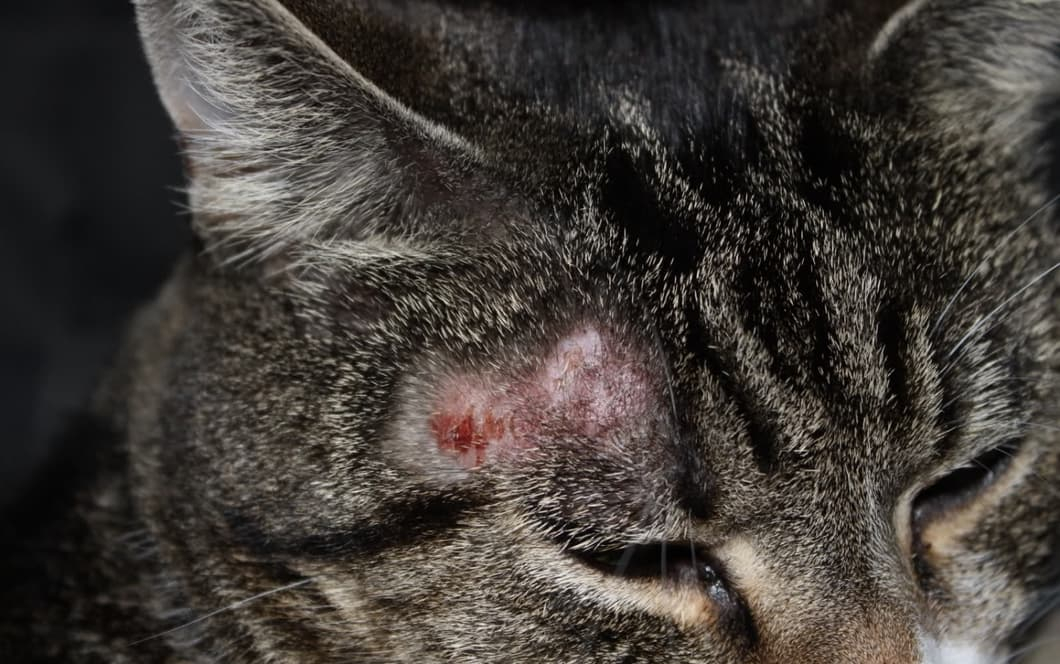
The classic sign is a roughly circular patch of hair loss with scaly, slightly reddened skin at the center. But not every case looks textbook. Watch for:
- Circular bald patches — often on the face, ears, tail, or paws
- Scaly or crusty skin at the lesion edges
- Brittle or broken hairs around the affected area
- Dandruff-like flaking on the coat
- Itching — variable; some cats do not scratch at all
- Thickened or deformed claws in severe cases
A cat showing more than one of these signs should be seen by a vet — especially if lesions are spreading or other household pets or family members develop similar patches.
Types of Feline Skin Fungal Conditions
The word “ringworm” covers several dermatophyte infections, each with slightly different appearances:
- Tinea capitis (Trichophyton / Microsporum) — the most common. Circular hair loss with broken hairs and a white, dandruff-like coating, most often around the ears.
- Pityriasis versicolor — a yeast-based infection (Malassezia) more common in oily-skinned cats in summer. Produces pink or light brown oval patches with flaking.
- Weeping dermatitis (eczema) — not a true fungal infection; presents as red, oozing blisters. Triggered by allergies, hormonal imbalance, or parasites. Not transmissible to humans.
- Lichen planus (feline) — red, flat-topped papules caused by immune disruption. Can merge into large painful lesions without prompt treatment.
Accurate typing matters because treatments differ. A Wood’s lamp (UV light) causes Microsporum canis infections to fluoresce green — a useful but not definitive screening test. Fungal culture is the gold standard for diagnosis.
How to Treat Ringworm in Cats
Treatment typically combines topical antifungals with environmental decontamination. Severe or widespread cases require oral medication as well.
Topical treatments
Applied directly to the lesions after clipping surrounding fur:
- Miconazole — cream or spray; broad antifungal coverage
- Clotrimazole — cream or spray; effective within 5 to 7 days of consistent use
- Fungin — propolis + clotrimazole combo; reduces inflammation and speeds healing
- Imaverol (enilconazole) — antifungal wash/emulsion for extensive coat involvement
- Lamisil / Exoderil — light antifungal creams for minor lesions
Always use an Elizabethan collar after applying topical treatments — antifungals contain ingredients toxic to cats if ingested.
Antifungal shampoos
For widespread infections, shampoos containing miconazole, enilconazole, or ketoconazole are used 2 to 3 times per week for 4 to 6 weeks. Common options: Nizoral, Sebozol. Rinse thoroughly — residue on fur can cause skin irritation.
Oral medications
Prescribed for severe cases or when topical treatment alone is not sufficient:
- Itraconazole — first-line oral antifungal for cats; well tolerated with food
- Fluconazole — alternative if itraconazole is unavailable
- Griseofulvin — older agent; requires close monitoring for side effects
Do not self-prescribe oral antifungals. Dosing errors can cause liver toxicity. A vet prescription is required.
Environmental decontamination
This step is non-negotiable — untreated surfaces will reinfect a treated cat:
- Vacuum daily — removes shed hairs. Dispose of the bag immediately.
- Wash all bedding at 60 degrees C (140 degrees F) or higher.
- Disinfect hard surfaces with diluted bleach (1:10 with water) or an antifungal household spray.
- Steam-clean carpets if possible — heat kills spores.
- Isolate the cat to one room during treatment until at least two consecutive negative fungal cultures are confirmed.
Is Ringworm Contagious to Humans?
Yes. Microsporum canis is zoonotic — it transmits from cats to people through direct contact. In humans, it produces circular, itchy, red-bordered patches on the skin (most often on arms and torso). Children, elderly people, and immunocompromised individuals are at higher risk.
If family members develop skin lesions during a feline ringworm outbreak, visit a dermatologist. Human ringworm treatment typically involves topical antifungals (clotrimazole, terbinafine) for 2 to 4 weeks.
Prevention
- Quarantine new cats for at least 2 weeks before introducing them to existing pets
- Regular vet checks for outdoor cats and cats in multi-pet households
- Keep grooming tools clean and cat-specific
- Strengthen immune health through quality nutrition and low-stress environment
Frequently Asked Questions
How long does ringworm last in cats?
With consistent treatment, most cats recover in 6 to 10 weeks. Without treatment, infections can persist indefinitely and spread to other animals and people.
Can ringworm in cats go away on its own?
Occasionally in healthy adult cats with strong immunity — but this is rare and takes months. It is not safe to assume self-resolution; untreated cats remain contagious throughout.
How do I know if my cat has ringworm or just dry skin?
Ringworm causes circular patches of hair loss with scaling — dry skin typically does not produce bald spots. A Wood’s lamp exam or fungal culture from your vet will confirm the diagnosis quickly.
Is ringworm dangerous for cats?
Ringworm itself is not life-threatening in otherwise healthy cats. But untreated infections spread across the body, cause secondary bacterial infections, and pose a significant risk to humans — especially children and immunocompromised adults.
Can I use human antifungal cream on my cat?
Some products like clotrimazole are used in both species, but dosing and formulation differ. Never apply human antifungals without veterinary guidance — some ingredients are toxic to cats.