Kittens grow fast — faster than almost any other domesticated animal. What they eat in the first 12 months shapes their bone density, immune function, coat health, and adult weight. The rules change by age, and getting them wrong early tends to create problems that are hard to reverse.
Feeding Kittens by Age: Month-by-Month Guide
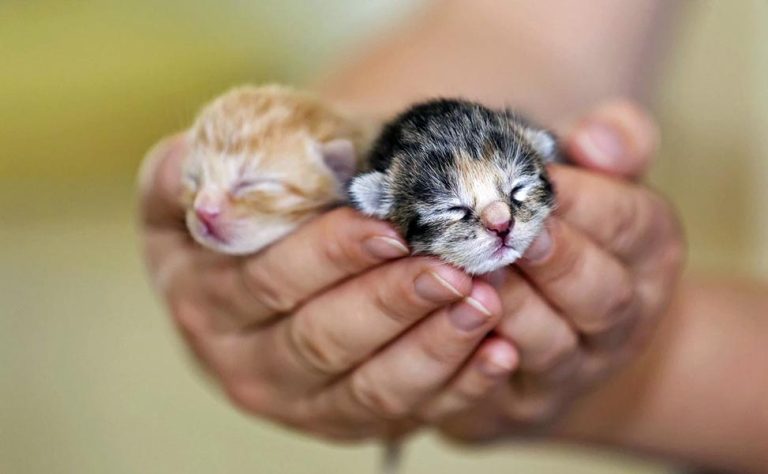
Up to 4 weeks — mother’s milk only
For the first three to four weeks of life, a kitten’s sole nutrition is mother’s milk (or kitten milk replacer if orphaned). Do not introduce solid food yet — the digestive system cannot handle it. If the mother is absent, use commercial kitten milk replacer (KMR), not cow’s milk. Feed every 2 to 3 hours via bottle or syringe.
4 to 8 weeks — weaning begins
This is the transition phase. Start offering wet kitten food mixed with a small amount of KMR to create a soft, porridge-like consistency. By week 6 to 8, most kittens accept wet food without the dilution. Mother’s milk continues alongside solids during this period.
- Offer food 5 to 6 times per day in small amounts
- Use flat dishes — kittens struggle with deep bowls
- Consistency matters more than variety at this stage
2 to 3 months
Kittens at this stage can handle soft, small pieces of food — no need to puree. Their jaws are developing and chewing ability increases. Protein is the priority. Good options:
- Wet kitten food (commercial or home-prepared)
- Small pieces of boiled chicken or turkey (boneless)
- Boiled sea fish (no bones, no river fish — river fish often carries parasites)
- Small amounts of low-fat cottage cheese (calcium for bone development)
Frequency: 5 times per day.
3 to 4 months
Raw meat becomes an option — chicken or veal, briefly frozen first to reduce parasite risk. Chewing larger pieces helps develop jaw muscles and a proper chewing reflex. Continue wet food as the base. Start introducing dry kibble (moistened slightly) if desired.
Frequency: 4 to 5 times per day.
4 to 6 months — rapid growth phase
This is the highest-growth period. Kittens need maximum protein for muscle development and calorie density for energy. Increase meal size proportionally. A 4-month-old’s jaw can handle larger chunks; small edible bones (from whole cooked chicken, never cooked fish bones) are appropriate.
Frequency: 4 times per day.
6 to 12 months — transitioning to adult feeding
By 6 months, most kittens have reached about 80% of their adult weight. Energy needs begin decreasing. Begin transitioning to 3 meals per day, then 2 by month 8. Switch from kitten formula food to adult cat food after month 12 (or per vet guidance for larger breeds, which mature more slowly).
Feeding Schedule Summary
| Age | Meals per day | Portion size |
|---|---|---|
| Under 4 weeks | Every 2-3 hours | 2-6 ml per feeding |
| 4-8 weeks | 5-6 | 1-2 tablespoons wet food |
| 2-3 months | 5 | Per package guidelines |
| 3-4 months | 4-5 | Per package guidelines |
| 4-6 months | 4 | Per package guidelines |
| 6-8 months | 3 | Per package guidelines |
| 8-12 months | 2 | Per package guidelines |
Commercial vs. Home-Prepared Food
Both approaches work. Each has tradeoffs:
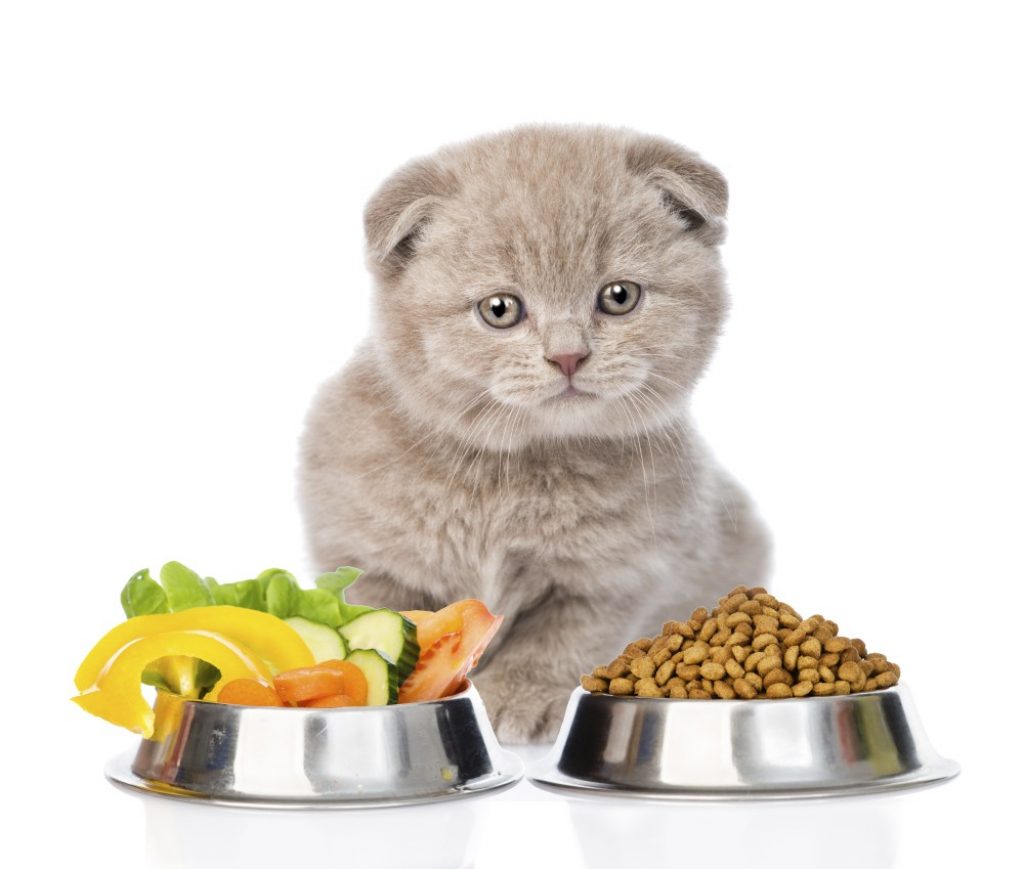
- Commercial kitten food — formulated to meet AAFCO or FEDIAF nutrient profiles. Removes the guesswork around taurine, calcium:phosphorus ratios, and vitamin A levels. Wet food is preferable to dry for kittens due to higher moisture and better protein digestibility.
- Home-prepared food — more control over ingredients, but requires supplementation (especially taurine, which is absent from plant foods and destroyed by overcooking). Consult a veterinary nutritionist before committing to home-made.
- Mixed feeding — a practical middle ground. Commercial food provides nutritional insurance; home cooking adds variety and palatability.
Important: kittens need significantly more calories per kilogram of body weight than adult cats. Do not feed adult cat food to kittens under 12 months — it does not contain sufficient protein or fat for growth stages.
Water
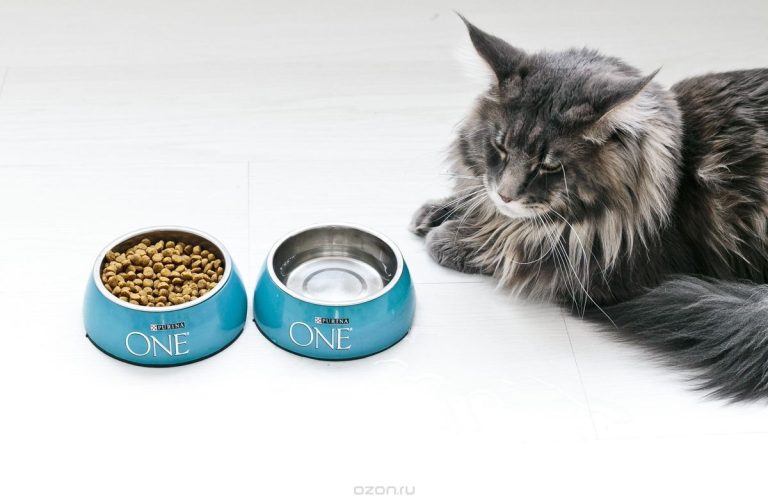
Fresh water should always be available, separate from the food bowl. Kittens on dry food especially need adequate hydration. If your kitten ignores the water bowl, try a pet fountain (moving water attracts cats) or increase wet food in the diet. The general guideline: 1 ml of water per kilocalorie of food consumed daily.
Foods to Avoid
- Cow’s milk — most cats are lactose intolerant; causes diarrhea
- River fish — high risk of parasites; sea fish only
- Raw egg whites — contain avidin, which blocks biotin absorption
- Onions and garlic — cause red blood cell damage (hemolytic anemia)
- Chocolate, grapes, raisins — toxic; can cause kidney failure or neurological effects
- Potato starch (raw or large amounts) — poorly digested, causes GI upset
- Liver in excess — rich in vitamin A; hypervitaminosis A causes bone deformities with overfeeding
- Economy-grade dry food — often high in grain fillers with inadequate animal protein; not suitable as a primary diet
Frequently Asked Questions
When can kittens start eating dry food?
Most kittens can handle moistened dry food by 6 to 8 weeks. Fully dry kibble is appropriate by 3 to 4 months when jaw development is sufficient. Ensure fresh water is always available alongside dry food.
How much should a kitten eat per day?
Follow the package guidelines on your kitten food, adjusted by body weight. Kittens generally need 200-300 kcal per day at 2 to 3 months, increasing to 300-400 kcal by 4 to 6 months. Monitor weight weekly — a growing kitten should gain steadily without becoming pot-bellied (which indicates overfeeding).
My kitten seems hungry all the time. Is that normal?
Often, yes. High growth rates demand high calorie intake. If your kitten is gaining weight on track and not showing signs of illness, appropriate hunger between meals is normal. If weight gain is absent despite constant eating, consult a vet to rule out parasites or malabsorption.
Can kittens eat adult cat food?
Not as a primary diet. Adult cat food does not meet the higher protein, fat, and mineral requirements of growing kittens. Short-term occasional feeding will not cause harm, but it should not be the main diet before 12 months.