Cats have lived alongside humans for at least 10,000 years, yet they remain genuinely mysterious. They communicate in ways scientists are still figuring out, their anatomy surprises even veterinarians, and their behavior has defied complete explanation. Here are 18 facts about cats that are actually worth knowing.
Biology & Physical Abilities
- Cats have a righting reflex. During a fall, a cat’s vestibular system (inner ear) detects orientation and its flexible spine rotates the body feet-first. The record survival fall documented by a veterinary study is 32 stories — roughly 100 meters. Cats spread their body like a parachute at terminal velocity, reducing impact force.
- Domestic cats can run up to 48 km/h (30 mph). That’s faster than Usain Bolt’s top speed. Their stride lengthens dramatically at full sprint due to a flexible, decoupled clavicle that allows greater front leg extension.
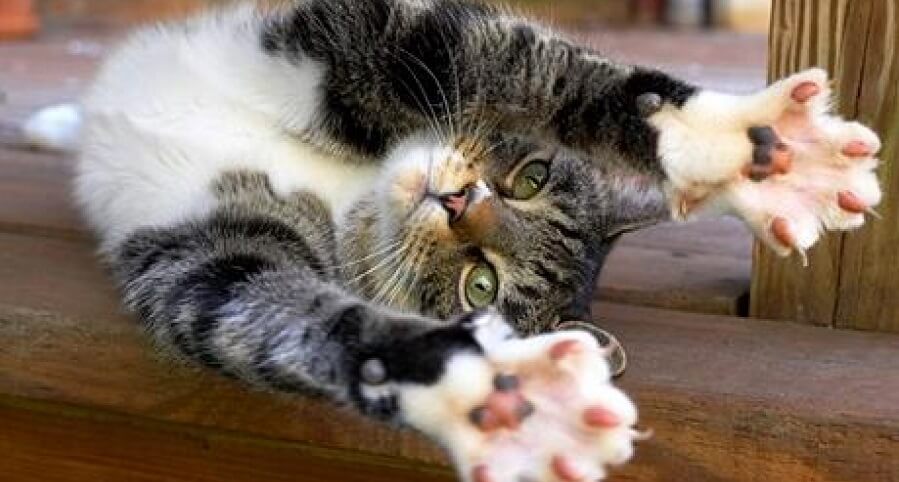
- Front and back paws differ structurally. Front paws: 5 toes, 5 pads, full retractable claws. Back paws: 4 toes, 4 pads, slightly less retractable claws. Some cats are polydactyl (extra toes) — a harmless genetic mutation.
- A cat’s kidneys can process salt water. Unlike humans, feline kidneys are efficient enough to filter salt from seawater for hydration. This is believed to be an evolutionary adaptation from desert-dwelling ancestors.
- Cats have a third eyelid — the nictitating membrane (also called the “haw”). It moves across the eye horizontally and provides additional protection. When visible in a resting, healthy cat, it can indicate illness or stress.
- Most cats are lactose intolerant. Adult cats produce very little lactase, the enzyme needed to digest milk sugar. Regular cow’s milk often causes diarrhea in cats. The “cats love milk” image is a myth — they’re drawn to fat content, not milk specifically.
Senses & Perception
- Cats can hear ultrasonic frequencies. Their hearing range extends to approximately 79,000 Hz — compared to 20,000 Hz for humans and 65,000 Hz for dogs. This allows them to detect the ultrasonic communication of rodents and, theoretically, the sonar clicks of some marine animals.
- Night vision is exceptional — but not perfect. Cats need about 1/6th the light humans do to see clearly, thanks to the tapetum lucidum (a reflective layer behind the retina). However, they cannot see in complete darkness, and their color vision is limited to blues and greens.
- Cats cannot taste sweetness. Unlike most mammals, cats lack the gene (Tas1r2) that encodes the sweet taste receptor. Evolution likely made it unnecessary — as obligate carnivores, sugar offers them nothing nutritionally.
- Taurine deficiency causes blindness. Cats cannot synthesize taurine (an amino acid) and must get it from food. A deficiency leads to retinal degeneration and eventual blindness, plus heart muscle problems. This is why cats cannot survive on a plant-based diet — plants contain no taurine.
Behavior & Communication
- Cats meow primarily at humans — not other cats. Adult cats rarely meow at each other. The meow is largely a behavior cats developed (or evolved) to communicate with people. Each cat has a distinct vocal repertoire tuned to its specific owner.
- Cats produce over 100 distinct sounds. Dogs use about 10 vocalizations. The cat range includes chirping, chattering, trilling, yowling, chirr, and the various gradations of purr — each carrying different communicative intent.
- Purring is not always a sign of happiness. Cats also purr when injured, giving birth, or stressed. The vibration frequency (25–150 Hz) is associated with bone healing and muscle repair — researchers theorize purring may have evolved partly as a self-soothing, physically therapeutic mechanism.
- Cats sleep 12–16 hours a day on average. Some sleep up to 20 hours. This is not laziness — it’s evolutionary. Cats are ambush predators: short bursts of intense energy for hunting, followed by extended rest to conserve calories.
- Slow blinking is a trust signal. A slow, deliberate blink from your cat is the feline equivalent of a relaxed smile. Research published in Scientific Reports (2020) confirmed that cats respond positively to slow blinking from humans — and approach more readily when people use it.
History & Genetics
- Cats were revered in ancient Egypt. The goddess Bastet was depicted with a cat’s head and associated with protection, fertility, and the home. Killing a cat — even accidentally — was a capital offense. Cats were mummified alongside pharaohs and commoners alike.
- All domestic cats descend from one wildcat subspecies. Felis silvestris lybica — the Near Eastern wildcat — is the sole ancestor of all domestic cats. DNA evidence suggests domestication began in the Fertile Crescent around 7,500–10,000 BCE, coinciding with agricultural development and grain storage (which attracted rodents, which attracted wildcats).
- Cat ownership correlates with reduced cardiovascular risk. A large study from the University of Minnesota found that cat owners had a 30–40% lower risk of dying from heart attack or stroke compared to non-owners. The proposed mechanism: reduced stress and anxiety through pet interaction. Correlation, not proven causation — but consistent across multiple datasets.
Frequently Asked Questions
Why do cats bring home dead animals?
It is instinctive, not affectionate. Cats are wired to hunt even when well-fed. Bringing prey home may be a learned behavior from their mother, who brought food back to the den. Some researchers suggest cats may be “teaching” their owners, as they do with kittens.
Do cats recognize their owners?
Yes, unambiguously. Cats recognize human faces, voices, and scent. Studies using fMRI-equivalent methods show cats’ brains respond differently to their owner’s voice compared to strangers. They simply choose when to respond — which is a separate issue from recognition.
Why do cats knead?
Kneading begins in kittenhood to stimulate milk flow from the mother. Adult cats continue it as a self-soothing behavior associated with comfort and contentment. Cats also have scent glands in their paws, so kneading on you is a form of scent marking.
Can cats really predict illness?
There is documented evidence that some cats detect changes in human body chemistry associated with seizures or blood sugar shifts. Oscar, a nursing home cat in Rhode Island, predicted hundreds of deaths by choosing to sit with patients in their final hours — possibly detecting biochemical changes in the dying process.