Trimming your cat’s claws is one of the easiest grooming tasks once you know what you’re doing — and one of the most neglected. Indoor cats can’t wear their nails down naturally, so regular trimming prevents painful ingrown claws, furniture damage, and accidental scratches. Here’s exactly how to do it safely at home.
Why Trim Your Cat’s Claws?
Outdoor cats naturally file their claws on trees and rough surfaces. Indoor cats have no equivalent outlet. Left untrimmed, claws can:
- Grow in a curve and pierce the paw pad, causing pain and infection
- Snag on carpet or upholstery and tear, which is painful and can lead to injury
- Cause accidental scratches during play or handling
The dewclaws — the rudimentary fifth claw on the inside of each front leg — are especially prone to overgrowing because they never touch the ground. Check these first, every time.
Trimming frequency: every 3–4 weeks for most indoor cats. Kittens may need more frequent trimming as they grow.
What You Need
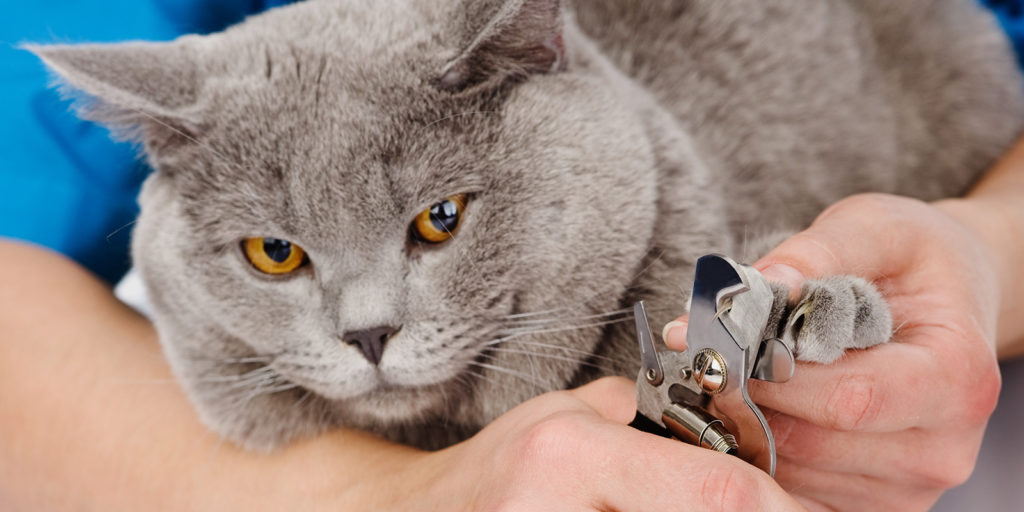
- Cat nail clippers: Scissor-style or guillotine-style — both work well. Do not use human nail clippers; they crush the claw instead of cutting cleanly.
- Styptic powder: For emergencies if you accidentally cut the quick. Cornstarch works as a backup.
- Treats: Essential for positive reinforcement.
Disinfect clippers with alcohol before each use. Dull blades split claws — replace them regularly.
Understanding Cat Claw Anatomy
Each claw has a translucent outer shell and a pink inner section called the quick. The quick contains blood vessels and nerves — cutting into it causes bleeding and pain. On light-colored claws, the quick is clearly visible as a pink triangle. On dark claws, use a flashlight from behind the claw to locate it.
Rule: Cut only the sharp, curved tip — 2–3 mm from the point, staying clear of the quick.
How to Trim Cat Claws: Step by Step
- Choose the right moment: After a meal or play session, when your cat is calm and relaxed. Never attempt on a stressed or agitated cat.
- Get comfortable: Place your cat on your lap or a stable surface. Hold them from behind if they’re nervous.
- Extend the claw: Gently press the pad of the toe between your thumb and forefinger — the claw will extend forward automatically.
- Identify the quick: Look for the pink section inside the claw. On dark claws, shine a phone flashlight through from behind.
- Cut straight across: Position the clipper at a slight angle (matching the claw’s curve) and cut 2–3 mm in front of the quick. A clean snip, not a gradual squeeze.
- Front paws first: Trim all five claws on each front paw, including dewclaws. Hind claws usually need less frequent trimming but check regularly.
- Reward immediately: Give a treat after each paw, not just at the end. This builds the association that trimming = good outcome.
If You Cut the Quick
It happens, especially early on. Press styptic powder directly onto the bleeding tip and hold for 30 seconds. Don’t panic — your cat will feel the discomfort but it isn’t serious. Clean the paw and monitor for a few hours. If bleeding continues beyond 10 minutes, contact your vet.
Introducing Kittens to Claw Trimming
Start from 8–12 weeks old. In the first sessions, don’t trim at all — just handle the paws, press the pads gently, and give treats. Make the clippers visible and normal. The first actual trim should be one or two claws only. Build up gradually over several sessions. A cat that accepts paw handling as a kitten will be far easier to trim as an adult.
When to See a Groomer or Vet
If your cat is genuinely unmanageable, it’s safer to have a professional trim their claws than to risk injury to you or the cat. Signs a claw has grown into the pad — limping, licking at the foot, visible curl of the claw — require a vet visit, not DIY treatment.
Frequently Asked Questions
How often should I trim my cat’s claws?
Every 3–4 weeks for indoor cats. If you hear clicking on hard floors, it’s overdue.
Should I trim my cat’s back claws?
Front claws are the priority — they’re the ones causing furniture damage and scratch injuries. Back claws can be trimmed too, but check them monthly and only trim if they’re visibly long or curling.
My cat won’t let me touch their paws. What do I do?
Spend a week just touching and handling paws during calm moments, without the clippers. Pair with treats. Once the cat accepts paw handling, introduce the clippers. Take as many sessions as needed — forcing the process creates lasting resistance.
Is it okay to use regular scissors?
No. Household scissors crush the claw rather than cutting cleanly, which causes splitting and can injure the quick. Use only purpose-made cat nail clippers.
Will trimming claws stop scratching behavior?
No — scratching is instinctual and serves multiple functions (stretching, marking, stress relief). Trimming reduces damage but won’t stop the behavior. A good scratching post addresses the root need.